¿Whatcha gonna do? Something: what we've learned from Ukraine
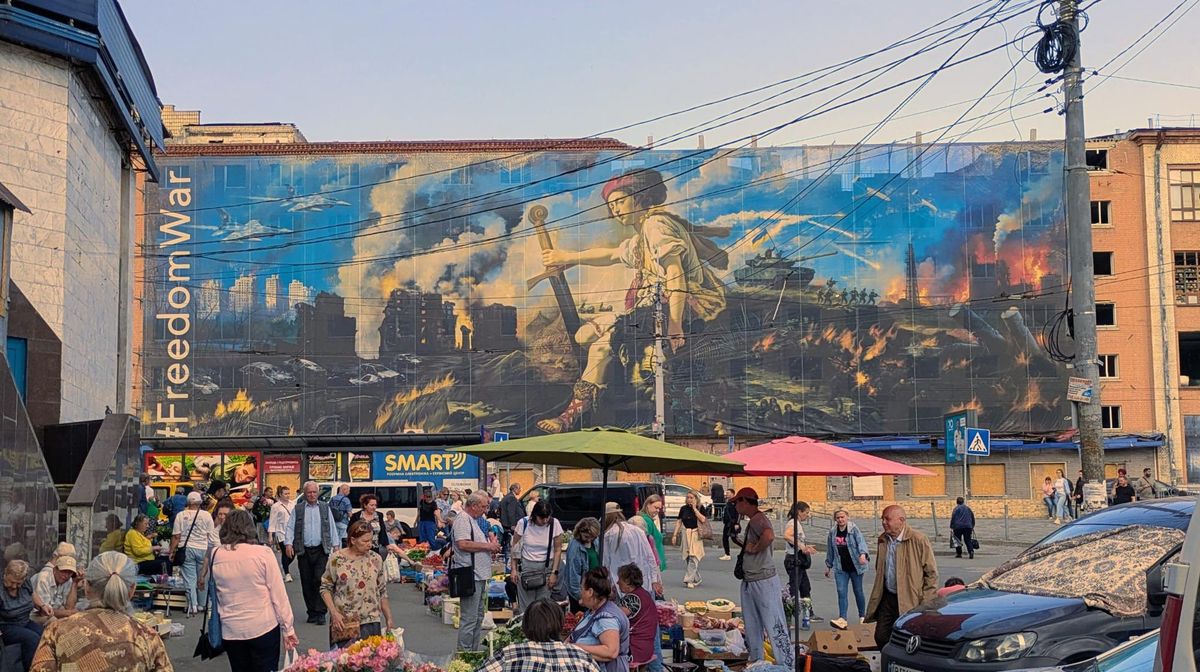
TLDR: I'm heading back to New Europe. I will be convening talks in Sofia, Lviv, Budapest, & Bratislava. If you want to support this work, while supporting a Maine artist I admire, scroll down.
It is time to empty the carrier bag of curiosity, and then fill it up again. I have been asking friends, family, colleagues, and fellow coffee shop addicts to share what they have learned from Ukrainians. And Hungarians. And dissident Russians. And Moldovans. Though primarily Ukrainians. Thankfully, there are, as of yet, no tariffs in the trade of question marks and lessons.
This time last year I was based in Riga (thanks to support from the CARSI program). My last act on this gathering expedition was to attend the Riga Conference. The Riga Conference is a prestigious annual gathering of diplomats, military officers, defense experts, researchers, respected NGO leaders, and journalists. Picture a sea of navy blue suits and military dress, and a crammed security entrance (partly because so many attendees are of such a status that they assume they are supposed to be in a different line, so they shuffle up to the front to find out where the VIP line only to then have to shuffle back with the hoi polloi).
Not in uniform, and not very sheveled, I was out of place. And I was exactly where I was meant to be at that moment. The same could be said for Andrii Dostliev. Though invited to speak at the conference, Andrii was also out of place. And he was where he was needed at that moment.
According to his introduction, Andrii was the first Ukrainian artist invited to speak at the conference. When he took to the stage, he didn't exactly follow the script. He told us that he was done speaking about resilience. While a key part of the conference, and certainly an important theme for those of us taking lessons from Ukrainians, Andrii was tired of the subject. He called out the way in which Ukrainian artists are expected to be sad but not too sad. In short, he implored us to move beyond expectations and caricatures, to consider the art and artistic practice of the Ukrainian artists, and to appreciate how that can provide paths to the experience of Ukrainians in general.
Message received. While we need, as outsiders, to understand resilience in these times--particularly among artists, writers, and storytellers--Andrii called us to a new practice. So with a bit of main-character-chutzpah, I found him and accompanied him during lunch. Andrii’s short moment on the stage sparked so much curiosity that there was a long line of attendees waiting to speak with him. To help manage the crowd, and to allow Andrii to eat, I started to facilitate the conversations. This turned into something of an impromptu unofficial conference session. I won't speak for Andrii, though I learned much about regional and global understanding of Ukraine through people’s questions. Near the end of the lunch, I asked Andrii, “if you and Ukrainian artists were hosting a conference and inviting journalists, academics, diplomats, politicians, and members of the defense industry, what would you call it?” Andrii paused, then said
GG, I would call it ¿What the f*ck?.
¿What the f*ck have YOU learned? It has been almost four years [of full-scale war]. That is enough time to get a degree. So stop asking us what we have learned. ¿What have YOU learned?
Sometimes less than a minute of listening is worth more than a year of talking, a month of reading, a decade of punditry, or two decades of scrolling. In this moment Andrii did what too few of us journalists are doing: he reset the framing. I've been carrying this question with me, reflecting on it, and bringing it out into the open as much as possible. As I prepare a month-long speaking and gathering tour of New Europe, I have brought Americans (some of whom are multi-nationals as well) into group conversations to consider this question. So let me ask you:
¿What have you learned from Ukrainians over these last 55 months?
awkward pause
One thing I have learned: don't wait. Do. Something. I've shared with many of you before that I am doing my best to drop rhetorical questions. Or rather, to answer rhetorical questions. One biggie that I think a lot of us find ourselves asking, while not considering:
¿What are you going to do? or ¿What ya gonna do? or really, ¿Whatcha gonna do?
I hear so many of us ask this after running off a litany of concerns, complaints, judgments, and worries about the world we are in. A world in which we feel too often, and not without reason, like we have no control over anything.
Great news. Ukrainians have demonstrated that we can answer this question.
SOMETHING
We can do something. If you've had the bad luck of engaging with me over the last year, you have likely heard me sharing examples of lessons from Ukraine, and examples of true innovation and problem solving. Whether fintech, artistic practice, effective protests to call out corruption, agricultural practice, preservation of food ways...not to mention drone technology and OSINT practices, Ukrainians have not let pitching the perfect delay the development of the good.
My next something: I'm off to New Europe. I have five events lined up. They are a bit messy at this stage. I will be designing and iterating and working my best to meet the moment. If you'd like to help, share your thoughts and questions with me. If you would like to help fund this work, I have a new offer.
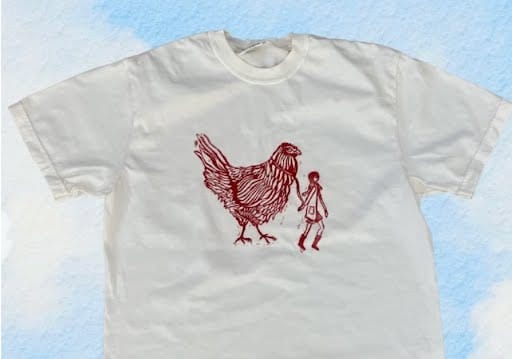
Recently I have come to connect with a Maine artist whose work I admire, Carmen Major. Carmen has agreed to collaborate in support of this work, by creating a limited edition t-shirt, with a special wood block image of a loon (process that for a minute). The front will read ¿whatcha gonna do?, and the back will read, yup, SOMETHING. All for the not-so-low price of $120 per shirt. Carmen is designing this special shirt this month, and will produce a small run of them after I return in November. This is not the shirt, but rather one of my favorite designs of hers:
Send a $120 one-time donation our way before Oct 1, and I will get in touch to find out your size and mailing address. Just smash, I mean tap, the button below.
Thank you, Дякую, Köszönöm, Благодаря, Ďakujem, Grazie
GG/ГГ