'This is our home and we want the world to see it happy again—not wounded': The Sumy Journalists of Kordon.media
One of the guiding principles of effervescence.world is be THOUGHTFUL, not CAREFUL. As any seasoned athlete learns, tentativeness is the difference maker, and can undermine years of training. At the same time, the nature of a world built increasingly on inequality requires civic minded mission oriented people to consider the potential consequences of their acts on the most vulnerable members of our communities.
So when I got organized for traveling to Ukraine last month, I needed to prepare thoughtfully. Expecting an increase in attacks on Lviv and Kyiv, I tested out a couple of air alert apps. After two days of very few alerts, my worry brain wondered if the apps were working. So I added Sumy….and I learned that the apps worked, and, believe me, they were effective (in that they went off so often and so loudly that I had to turn them off after 2 hours).
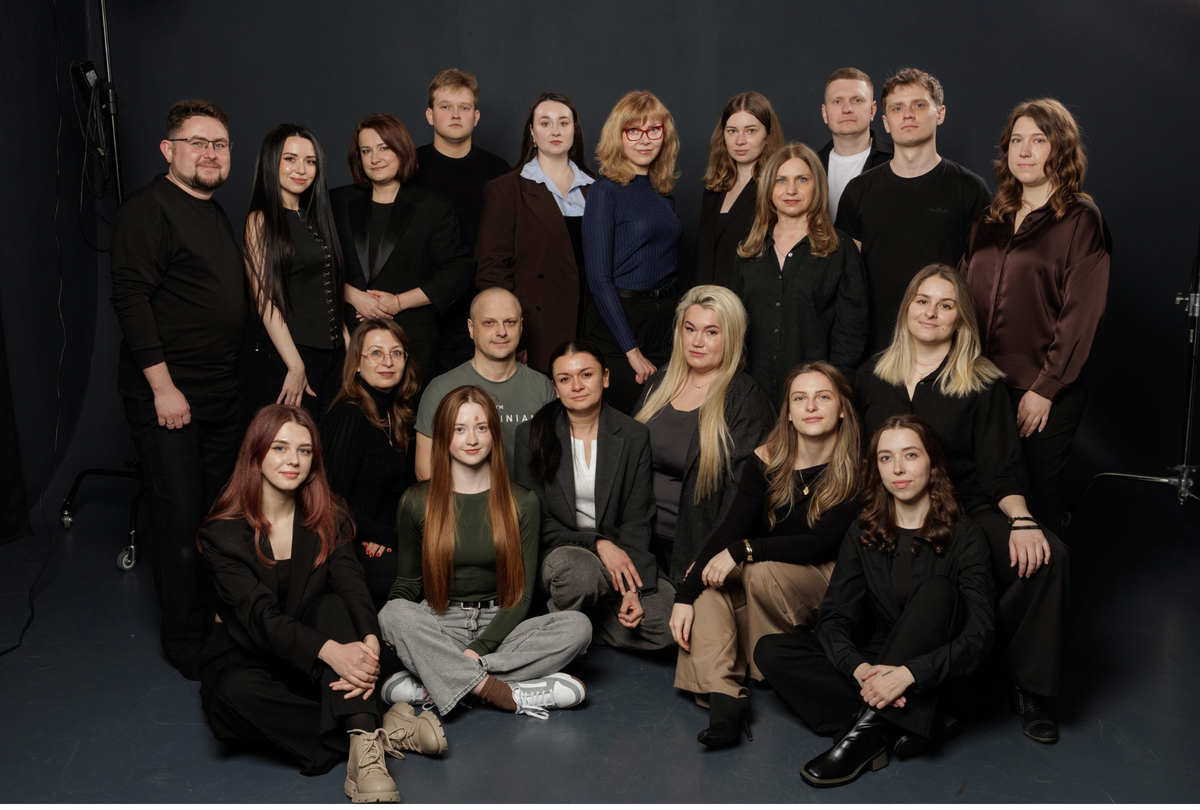
I know of Sumy from a trusted colleague and de facto editor of mine, who is from there and whose family remains there. Last year she introduced me to a news organization, Кордон.Медіа / Kordon.media. Kordon.media is a remarkable example of journalism in action. It launched in 2023, and its staff is made up of seasoned journalists and others who joined to commit acts of journalism on behalf of their home, their country, and Europe.
Кордон is Ukrainian for border. The Sumy Oblast, or Sumshchyna, shares Ukraine’s longest border with Russia—over 560 km, or 350 miles. Sumy the city is under constant threat and frequent attacks. This last month those attacks have increased. Perhaps you read about the attack on the funeral procession a couple of weeks back. Otherwise, you may not have seen much about Sumy. Catch up when you can. In the meantime, let me give you a three point framing:
1) Russia’s military resources are relatively limited, so we should consider why the Kremlin chooses to increase attacks where and when.
2) While the direct attacks on Kyiv are on Ukrainian society, Ukrainians, and Ukrainian culture, they are less part of a military strategy and should be interpreted as efforts to intimidate and influence politicians and exploit our naivete in communities far from the violent front-line.
3) Attacks on Sumy are strategic for both so-called diplomacy and military goals, so for those news organization that persist on only covering the violent front of the war, Sumy should be a big part of the coverage if we want our readers/listeners to understand this war.
In Kyiv, I had the chance to speak with Лілія Наумова / Liliia Naumova, one of Kordon’s top editors. Since then, I reach out to her occasionally for updates, and I am learning too much from her to share. Last week it was hard to connect, because of regular power outages in Sumy. This weekend we caught up and I asked her to share some thoughts. Here is an excerpt of the conversation:
GG: Liliia, Sumy is home for you....what was it like and what is it like now? Why do you stay there despite all the danger?
Liliia Naumova: I was born in Melitopol, a city in southern Ukraine. My parents are buried there. Today, Melitopol is occupied by Russia, and I cannot visit their graves. That is incredibly painful. This war has separated not only the living—it has separated the living from the dead as well.
I have lived in Sumy for the past 25 years. This is my home now. It is located only 30 kilometers from the Russian border and has been under constant attack since the beginning of the full-scale invasion. We have felt it especially strongly since the start of the Kursk operation.
Before the war, Sumy was a beautiful and peaceful city. We have parks, flowers, historic churches, museums, and the Psel River runs through the city. We have three large universities where students from many different countries used to study. There were young people everywhere, and the city was full of life.
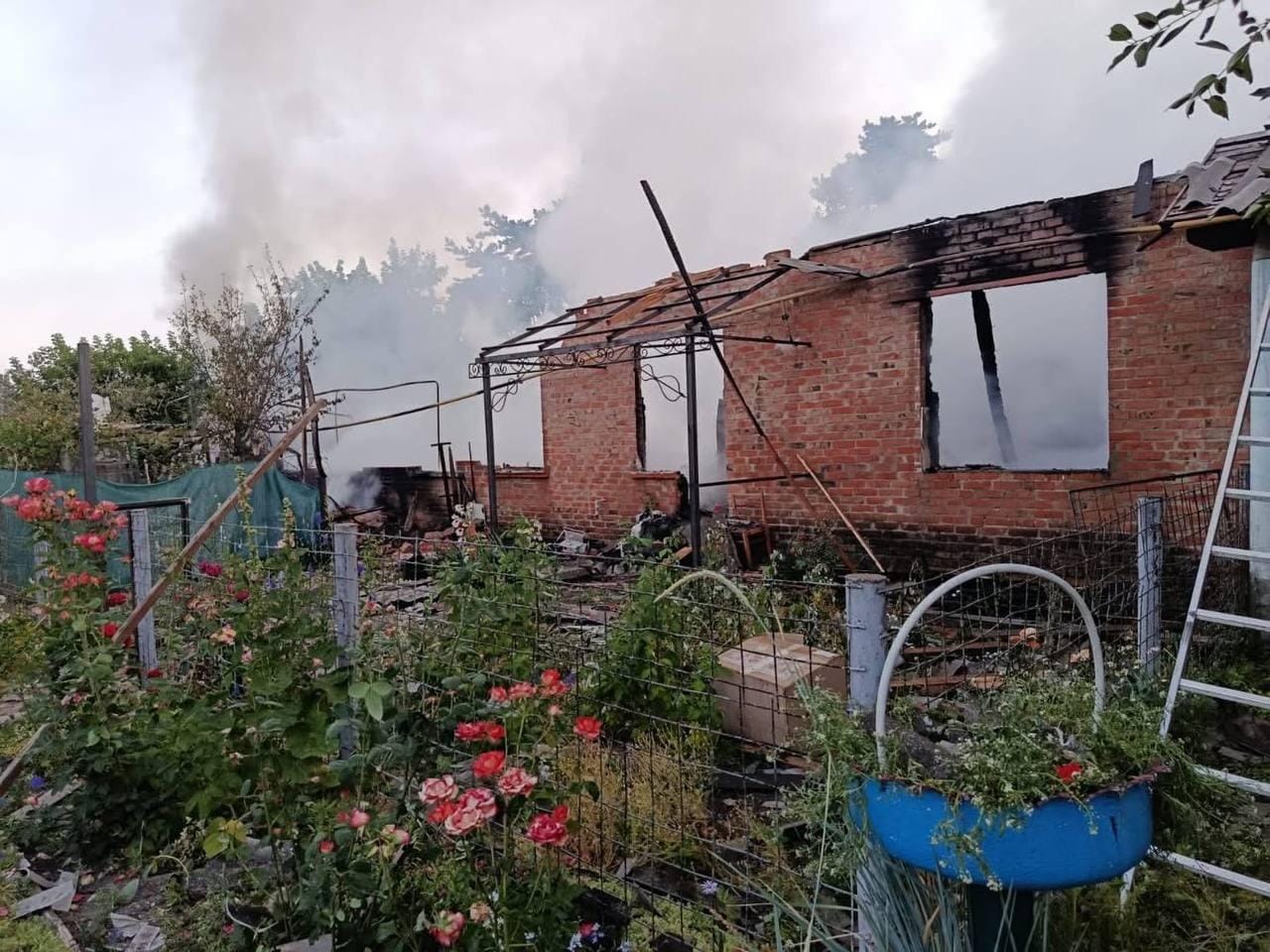
Today, Sumy has changed. Many homes have been destroyed. University buildings, including historic ones, have been damaged. Russian drones, missiles, and guided aerial bombs fly over our city.
But the worst thing is not the destroyed buildings. The worst thing is when innocent people die. On April 13 last year, during one of the biggest Orthodox Christian holidays, Russia struck the center of Sumy with two ballistic missiles. Thirty-five civilians were killed, and more than one hundred people were injured.
On July 3 this year, a guided aerial bomb hit an apartment building on one of the city's main avenues. It was a warm summer evening. People were walking, sitting in cafés, eating ice cream. Four people were killed, including a five-year-old girl and her mother. One of our colleagues from Kordon.Media lived in that building. Her little son is only ten months old. Thankfully, they survived.
Why do I stay?
Because this is my home.
Because this is my work.
And because my husband is here. He serves as a border guard. I don't want to leave him alone. When we got married in church, we promised to stay together in joy and in sorrow. For me, those are not just words. They are a promise that I intend to keep.
GG: I have seen how life goes on in other cities in Ukraine during this war. In fact, I see more community, more fun, more activity in Ukraine than in most US cities these days. Is that true in Sumy as well? You are the border, you are under constant attack it seems. Are people also getting out despite this?
Liliia Naumova: Yes.
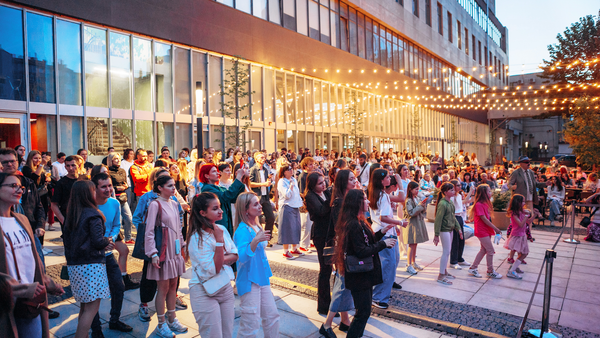
Despite the war, people continue to live. There is simply no other choice. Cafés, shops, and theaters are open in Sumy. Children go to school whenever there is a shelter available. Young people meet their friends. Families walk through the parks. We try to live as normally as possible. But this "normal" is completely different from what it used to be.
We can be sitting in a café, and a few minutes later hear explosions. We can be taking a walk when the air raid siren suddenly starts. We have learned to recognize the sounds of missiles, Shahed drones, and different types of weapons. When we hear the sound of a Shahed drone or a missile, almost everyone can tell whether it is close or still far away. It is frightening to realize that, but war changes even the smallest everyday habits.
What impresses me most is not people's fear. It is the way they support each other. After every attack, hundreds of people come to help clear the rubble. They bring food, clothes, and whatever people need. They support families who have lost their homes or loved ones. That is what helps us endure. We have not gotten used to war. We have simply learned how to live beside it.
GG: Can you tell me about how you decided to join Kordon, and why Kordon.Media is so important to the people of The Sumy region?
Liliia Naumova: Oh, I truly believe Kordon.Media is the best news outlet in the Sumy region. Today, people know us not only across Ukraine but far beyond its borders. We have readers and followers all over the world because we tell the truth and show what is really happening in the Sumy region.
Before joining Kordon.Media, I worked as Deputy General Director of the Sumy Regional Television and Radio Company, and later I headed the press office of the Sumy Regional Council. But after some time, I realized I wanted to return to journalism. I wanted to ask questions again, search for answers, and write stories that could make a difference in people's lives. That is why I joined Kordon.Media and became the head of the Social and Political Department.
During wartime, it is important to report not only on missile strikes and attacks. It is just as important to explain what is happening inside the government, how decisions are made, how public money is spent, and how local communities live and survive. People deserve to know the truth. Our journalists are usually among the first to arrive at the scenes of Russian attacks. We tell the stories of ordinary people, document war crimes, and show the world what life in a border region really looks like.
GG: I met one reporter on your staff, Oleksandr, and he told me he had never been a journalist before joining Kordon. Yet I think he could come to America and teach journalism with all he has learned and done in the last 3 years. How has Kordon helped develop the skills of journalists and journalism in the face of all of the challenges?
Liliia Naumova: The most important thing is the atmosphere within our team. We don't just work together—we genuinely care about one another. Our management places a great deal of importance on the safety and well-being of every team member. We regularly attend professional training programs, participate in workshops, work with psychologists, and spend time together outside of work. That is incredibly important when you work alongside war every single day.
One thing I especially appreciate about Kordon.Media is that young people are trusted. They are talented, brave, and deeply committed to what they do. We genuinely love our work, and we support one another every day. Our CEO, Alyona Yatsyna, has an extraordinary ability to bring people together around a common purpose. Sometimes it feels as though she knows each of us even better than we know ourselves. I think that is one of the reasons why, in just three years, Kordon.Media has become one of Ukraine's most respected regional media organizations and has been included on the Map of Recommended Ukrainian Media.
For example, one of our colleagues, Iryna, joined us while she was still a journalism student. She first worked as our social media manager, but later decided she wanted to become a war correspondent. Today, she works alongside an experienced mentor, continues learning every day, and is growing into an excellent journalist.
No amount of theory can teach you as much as real-life experience. Of course, we wish we had never had to gain this kind of experience. But the war never asked us whether we were ready. It simply came into our home. The work our team does every day has already been recognized with state awards. Our journalists, camera operators, and photographers have received national honors for their work. Those awards are not simply recognition. They are proof that even in the darkest times, honest journalism matters. It matters because it tells the truth, preserves history, and gives a voice to people whose lives have been changed forever by this war.
GG: When you visit your daughter in America, how do you talk with people about what is happening in Sumy? How can people like me share your story so that we do a better job of recognizing that you are working for all of us, for people who want to support curiosity and civic society?
Liliia: Whenever I am in the United States, I always talk about Ukraine and about the war. I have a close friend, Carol Kramer, who lives in Newton, Iowa. We first met in 2009 when I came to the United States through an exchange program. Since then, we have stayed in touch. After Russia's full-scale invasion began, Carol welcomed one of my Ukrainian friends, Alina, and her two children into her home. Eventually they were able to return to Ukraine, but Carol's support meant so much to all of us. She constantly asks what is happening in Ukraine, supports our country, and continues helping Ukrainians whenever she can. I am deeply grateful to people like her.
I traveled to the United States for my daughter's graduation from university (she graduated with excellent results, and journalists came to interview her). When people there learned that I was from Ukraine, they immediately told me they supported my country and were worried about our people.
Another time, my daughter and I were traveling by bus to Washington, D.C. An elderly man overheard us speaking Ukrainian and asked where we were from. We ended up talking for almost an hour about Ukraine, the war, and about how ordinary people are living through it.
Conversations like these are incredibly important. The world must never become accustomed to the war in Ukraine. People need to remember that it continues every single day. That is exactly why we do our work at Kordon.Media. We tell the truth so that people around the world can see what life is really like in Ukraine's border communities. We want them to understand that behind every headline there are real people, real families, and real lives forever changed by this war.
GG: What are your goals for Kordon.Media moving forward? (you may want to say something about what is possible in the future when/if the world supports Ukraine and we can help reverse the destruction)
Liliia Naumova: Our CEO, Alyona Yatsyna, often says, "Kordon.Media will exist as long as the border exists." I love those words. We are a media organization dedicated to the Sumy region, and we will continue telling the stories of our home—during the war and after Ukraine's victory. We sincerely hope that the world will continue to stand with Ukraine. This support matters not only to our country, but to everyone who believes in freedom, democracy, and the right to live without war.
Our dreams are actually very simple. We want to hear children's laughter instead of their tears. We want to see children's toys in children's hands, not lying among the rubble after Russian attacks. We want young people to build families instead of saying goodbye to each other before leaving for the front. We want to see young women wearing beautiful dresses instead of military uniforms, even though we have enormous respect for every woman who is defending Ukraine today. We want businesses to grow, new companies to open, and people to make plans for the future instead of hiding from everything that falls from the sky, destroys our cities and villages, and takes innocent lives.
And I truly believe that one day Kordon.Media will write not about destruction, but about rebuilding the Sumy region. About people returning home. About children playing safely in the streets again, without fear.
Because this is our land.
This is our home.
And we want the world to see it happy again—not wounded.
If you are an editor, a journalist, or simply someone who is looking to engage and understand the global war of cynicism against hope, I implore you to insert Kordon.Media into your reading rotation. And if you would like to connect with the people there, or other innovative independent news organizations throughout Ukraine, let me know.
Until then, be thoughtful, not careful.
Big thanks to the paid subscribers who enabled the Notes From New Europe trips to Hungary, Bulgaria, and Ukraine over the last three months. Your support not only offset some of the costs of this work, you also encouraged engagement and cross-border learning.