Lessons from a Small Nation Facing Big Challenges: reading the signs from Armenia's elections
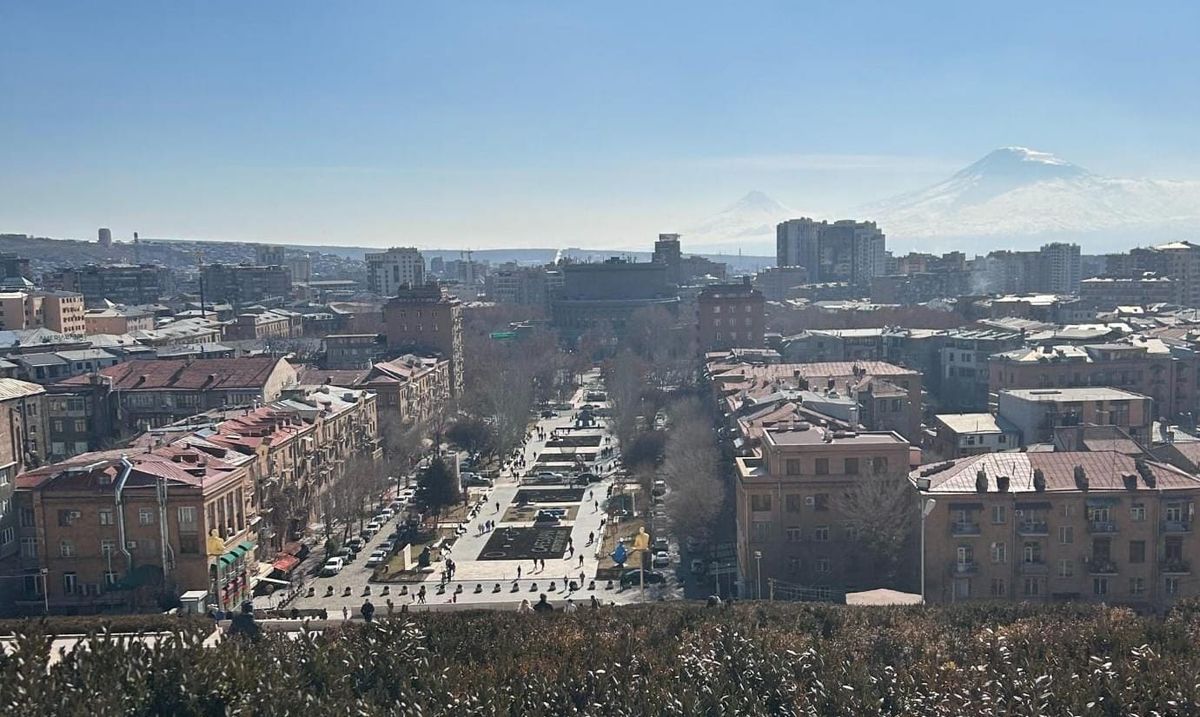
By at least one measure, the good people of Wyoming have the most voting power* in the most powerful democracy in the world (pause for dissenting views/teeth gnashing/rumination). So maybe they should have a global press presence. ¿Could the Wyoming Star, a glossy newspaper that appeared on the streets of Yerevan in the lead-up to Armenia's parliamentary elections earlier this month be legitimate? Ummm, no.
Allow me to point you to reporting from Factor.am, a remarkably robust independent news organization in Armenia. Factor.am and Factor TV did a little digging into the Wyoming Star, and found as many questions as answers. The print version of the newspaper (sorry "newspaper") was published in Moscow, with articles that shared "a distinctly propagandistic nature and are built around the same ideological axis." These include themes like: "Armenia is under U.S. influence," "cooperation with the West is dangerous," "moving away from Russia is a disaster."
These narratives are quite similar to the discourse spread by experts and political analysts participating in discussions and debates on Russian federal television channels regarding Armenia’s domestic politics and foreign policy course, which in turn often align with the official positions of the Kremlin.
Ամբողջական հոդվածը կարող եք կարդալ այս հասցեով՝
© factor.am
You can follow their reporting here. And watch the Factor TV report here (in Armenian-so translation tools necessary).
Let's be clear, Wyomingites are not interfering in foreign elections, and they are not behind a "newspaper" published in Moscow. While the details of this particular effort strike me as particularly quirky, it fits some ongoing patterns across New Europe. Repeat after me: the anti-globalist movement is highly globalized. In Armenia, as in Bulgaria, Moldova, Hungary and other nations with elections over the last year, those who call out "foreign interference" tend to be cutting and pasting from the same playbook.
The good news for civic society in Armenia: The majority Armenians did not seem highly influenced by FIMI (Foreign Information Manipulation and Interference) and DIMI (Domestic Information Manipulation and Interference) efforts. Turnout was high (roughly 60%), and Nikol Pashinyan’s Civil Contract (Քաղաքացիական պայմանագիր) party defeated three pro-Russian parties, securing, with smaller ally parties, 61% of the seats in parliament.
I was not able to get to Armenia for the elections myself, so I have spent the last few weeks reaching out to journalists and researchers there to see what global lessons we can take from them and what they experienced and witnessed. One of my most trusted Ukrainian researchers pointed me to the work of Katya Mamyan of Hetq Media Factory and Infocom.am. I tested some assumptions with Katya, primarily about how to look at these elections in a global context.

GG: Katya, how would you describe what happened earlier this month in the parliamentary elections?
Katya Mamyan: As a data journalist in Armenia, I would describe the June 7 parliamentary election first of all as a stress test: not simply a contest between government and opposition, but a test of whether voters would make decisions under post-war trauma, geopolitical pressure, economic fear, disinformation, alleged vote-buying, and deep distrust of political elites.
The Strong Armenia campaign was not only anti-Pashinyan or pro-business. It also carried narratives familiar from Russian-aligned influence environments: that Armenia’s peace agenda was really Azerbaijan’s agenda, that Pashinyan’s reelection would lead to new territorial concessions, and that hundreds of thousands of Azerbaijanis could be resettled in Armenia. These claims were politically powerful because they touched real fears: security, sovereignty, land, identity, and humiliation. But they also pushed the campaign into fear-based manipulation.
GG: From afar it seems there is something going on in Armenia with similarities to what happened in Moldova and Hungary, and to a lesser extent Romania. Some of the disinformation and manipulation tools that proved highly effective around the globe over the last several years did not work in these countries. Or perhaps, even worked against the parties that were supposed to be the beneficiaries.
Mamyan: The comparison with Moldova and Hungary is useful, but only if we avoid oversimplifying it. These are three very different cases. Moldova is an EU candidate country with a direct unresolved Russian military and political presence through Transnistria. Hungary is an EU and NATO member where the Russia-friendly actor was the long-ruling incumbent. Armenia is a post-Soviet country that has depended heavily on Russia for security, energy, infrastructure, and labor migration links, but where Russia’s failure to protect Armenia during the security crises of recent years seriously changed public perceptions.
The shared pattern I see is this: in all three cases, elections became sovereignty elections. The question was not only “Which party do you prefer?” but “Who gets to define the country’s future direction?” In Moldova, voters backed the pro-European PAS despite documented concerns about Russian interference, illicit financing, disinformation, cyberattacks, and vote-buying. In Hungary, voters removed Viktor Orbán’s Fidesz after 16 years in power, despite a media and influence environment long favorable to the incumbent. In Armenia, voters did not simply endorse the government; many also rejected a return to a political camp associated with Russia, the old elite, and a security model many Armenians now see as having failed.
GG: As a data journalist, what lessons are you taking these days from what is working--or at least seems to be working?
Mamyan: The main lesson I take is that we need to measure not only the supply of disinformation, but also the social demand for it: which fears, frustrations, memories, and desires make certain narratives persuasive. Fake pages, Telegram channels, coordinated posts, AI videos, and paid networks matter, but they do not work in isolation. Voters interpret them through lived experience. In Armenia, Moldova, and Hungary, transparency around foreign interference, vote-buying, and fear-based narratives helped turn hidden influence into a political issue. Resilience, then, is not only institutional — it is also social: voters are not empty vessels waiting to be manipulated; they compare manipulation with memory.
For journalists, the responsibility now is to avoid turning this into a victory myth. The real questions begin after the election: Can Armenia’s institutions become stronger than its leaders? Can the peace process move without new coercion? Can the government avoid reading this mandate as permission for unchecked power? Can the opposition rebuild around policy rather than grievance and external patronage? And can Armenian media keep documenting both foreign interference and domestic abuses without becoming an instrument of either camp?
That, for me, is the most important comparison with Moldova and Hungary. In all three countries, voters showed that manipulation has limits when it collides with lived experience. But elections are only one moment of resilience. The harder work is what comes next.
Indeed. ¿What comes next?
One option: to look at these elections in relatively smaller nations in order to see the best practices in managing the effects of mis- and disinformation. Those of us in the US and the UK have plenty of opportunities to help voters understand the extent to which various narratives take hole, and to track where those narratives originate, and how they tap into existing fears, and simplified.
* Registered voters in Wyoming: 340,991 US Senators: 2 Electoral votes: 3
Registered voters in California: 23,23,222,034 US Senators: 2 Electoral votes: 54
...Maine: 965,085 US Senators: 2 Electoral votes: 4
...Washington, DC: 529,695 US Senators (voting): 0 Electoral votes: 3