The Curious Case of Yeahbuttism: construction of preference in an age of cynicism
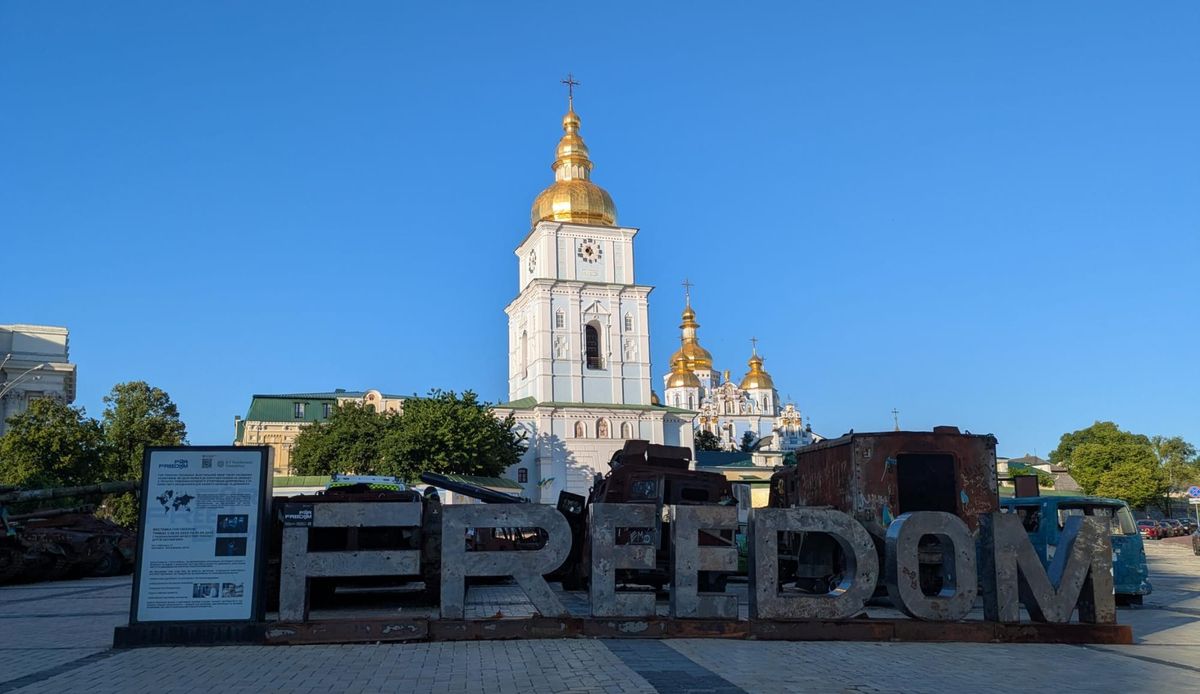
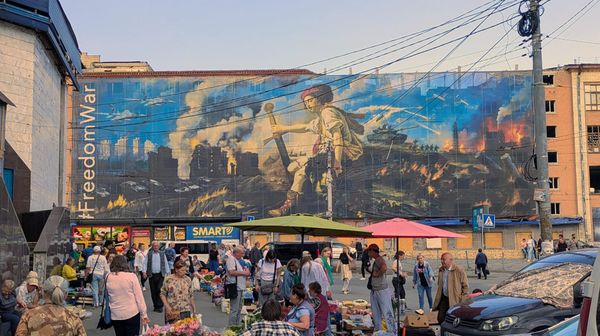
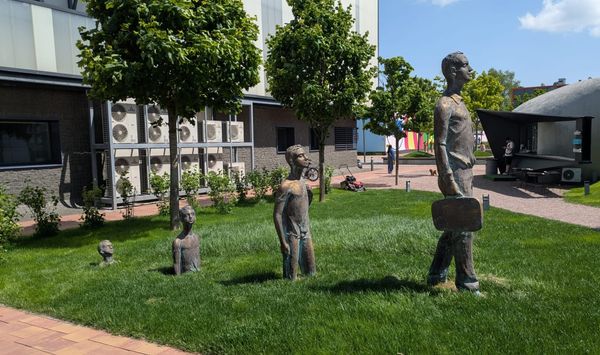
TLDR: I spent the last two weeks in Ukraine. It was an opportunity to connect in person with so many people I admire from afar. Being there opened up some helpful ideas new framings for understanding. And diagnoses for what ails us.
Last month, Hungarians took action after 16 years of increasingly authoritarian rule. First they showed up. Then they voted in a record number of seats for one party in their parliament, putting the Tisza party in control of the government with a super-majority. This last part is of utmost significance, as it allows for necessary constitutional reform.
It was also an opportunity for the world to witness what is possible in the face of authoritarianism. And the election results were an opportunity for Hungarians to express joy, community, and forward momentum—not only relief, as many also expressed. As those of you who reached out for my brand of small-scale journalism from the scene in Budapest (thank you for that) know , it was an energizing example of collective effervescence.
The next morning, at the top of The Guardian’s feed, was this headline:
EU relieved to see back of Orbán but Magyar’s Hungary may still present problems
“BUT.” The most effective counterattacking threat in the game of headlines. Those in media markets where we get little context about events in smaller nations had a story framed with the sort of carefulness to which we journalists are so often prone. Another framing of an historic moment around a simplified hot take--one that comes across as dismissive, thereby stealing agency from a community. It is but one technique within the false binary narrative approach–and approach that shuts down nuanced inquiry. The pervasiveness of this approach goes beyond the news media. We all seem to do it. This disease of yeahbuttism.
Instead of “I don’t know this Peter Magyar and this Tisza party that everyday Hungarians are praising for their campaign. ¿How did they manage this and what were voters saying when they celebrated?” We get “¿yeah but, what do we know about this guy?” That but….
Yeah I know that was awful the police shot that unarmed guy, but what was he doing?
Yeah, I know killing journalists is bad, but why didn’t they evacuate when they knew it was going to be dangerous?
Yeah, I understand this is a compelling story about sanctions evasion, but don’t you know it is an election year and we have to put our resources into that and Americans aren’t going to listen to more things about the Balkans?
Or, and this one is personal, Yeah GG, I hear you about the tens of thousands of children who have been captured, but can we really know the number is accurate?
One of the projects central to my art and journalism over the last year has been the plight of children in war zones. I’ve been listening to Ukrainian lawyers, NGO leaders, soldiers, filmmakers, business-people, and of course baristas share their thoughts on the nature of war crimes on children. When I have an opportunity to talk to journalists, lawyers, and seemingly engaged Americans, I ask them some version of this question: ¿What might we do about children captured? After months of disappointed responses, I am shifting the question to a broader one: ¿Why don’t we seem to care about children? And while I’ve centered the Ukrainian children, those who have been captured and those who are going through contemporary Russification in occupied territories, this is connected to what has happened to South Sudanese children, and should remind us of what has happened to countless native children across the US and Canada.
There are no rhetorical questions in the effervescence collective. So as I worked to figure out why we don’t seem to care, it brought me to yeahbuttism, which then brought me Dave Nussbaum of Psychgeist, who then introduced me to the work of Paul Slovic. Paul politely considered this concept of yeahbuttism, and generously spoke with me for hours about how we make decisions, and how we weigh the costs of caring. Spoiler alert: we are not so great at it these days.
I’ll be sharing Paul’s broader thoughts on the children in the coming weeks. For now I want to share one theme Paul introduced me to: construction of preference (1995). This may be a new concept for those of you who are not well versed in his work, or that of his peers like the late pioneers of decision-making research Sarah Lichtenstein and Amos Tversky). It was a new concept to me...yet because of Paul's generosity and patience, it now feels central to understanding the challenges some of us have been facing.
According to Paul:
Our brains are not wired to make tradeoffs between complex, unfamiliar entities. Many mental strategies we use to resolve tough tradeoffs lead us to be inconsistent-even irrational- in the sense that this leads us to make decisions that contradict our values.
Without making tradeoffs, we could not move forward. This does not mean that we make conscious, rational, or rather informed decisions:
Slovic: The idea that people have stable, well-defined preferences—waiting to be revealed when asked—is deeply embedded in economics, policy analysis, and much of public discourse. The concept of constructed preferences challenges that assumption. It holds that, especially for unfamiliar, complex, or emotionally charged choices, preferences are not simply retrieved from memory but are actively built in the moment, shaped by how options are presented, what comparisons are available, and which considerations come to mind.
Music to my ears...acts of journalism require us to challenge assumptions.
Slovic: For journalists, the key takeaway is that preferences are not fixed facts about individuals. They are dynamic, context-sensitive, and often fragile. Reporting on public opinion or decision-making should therefore pay close attention not just to what people choose, but to how the choice was framed, what alternatives were considered, and which values were made salient. Understanding the construction of preferences helps explain why opinions can shift, why people can hold seemingly contradictory views, and why careful design of decision processes is essential—especially when the stakes are high.
To be clear, Paul is not conflating yeahbuttism with construction-of-preference. Yet, in being thoughtful-not-careful I want to encourage us, in our process of making sense of the world through making sense of ourselves, to consider what scholars like Slovic, Lichtenstein, Tversky and others have been trying to teach us about our operating system's strengths and weaknesses so that we may adapt how we converse, explore, and problem-solve in these very complicated times.
For those of you ready to get into the scholarship, start here. I'll be returning to Paul Slovic's work this summer. As it turns out, we humans are not wired to truly understand big numbers. Let's think about what this means when trying to make meaning around what is happening to humans across the globe in the face of what we might describe as inhuman acts.
Thank you for engaging - GG