The Seventy Year Itch: 2026 to 1956 and back again, for Hungary and the world
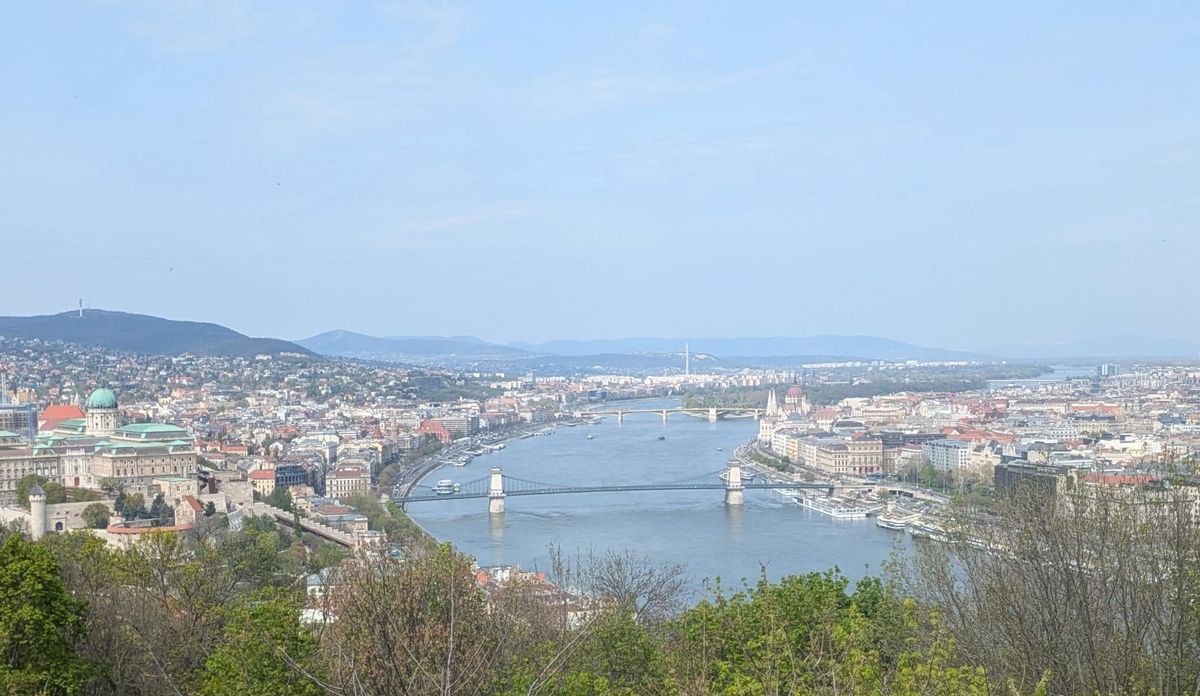
I am preparing to depart Budapest. I, and the Hungarians with whom I have been traipsing across this singular city are feeling...so much...I'm not sure the right words. I want to say exhaustersized though that is hard to say, so I'm going with изморентусиазиран*. ¿Even harder to say? Try it this way: is-more-en-toos-ee-ah-ZEER-on. ¿What does it mean? Your robot translators might tell you it means "over-exhausted." Though that's because they need to simplify, and they struggle with nuance. I take it to mean something a little more fluid. You may remember the feeling from your youth:
playing ball, or tag, or calcio*, or twop*; that perfect spring evening; your parents calling you inside from the 'darkness,'; though it isn't dark to you; there is light in the sky, and you don’t want to lose sight of it, for fear you won’t see it again.
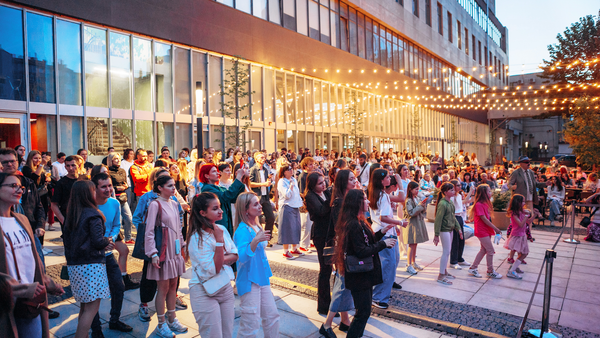
I am not writing about Hungarians’ excitement for the result of a political contest, even though that is a part of this moment. Of course that was, and is, historic (the Tisza party received more votes and a larger percentage of the vote in any Hungarian election). No, there is something broader and more important going on. A throwing off of careful concern, a moment of collective effervescence*, and a reminder of possibilities. Already the analyses from Brussels, Washington, New York, and London are skipping skipping to a carefulness that misses the action. I can’t write of that here and not seem like a pedant, or share the pathetic behavior of some of my peers among the foreign press who were part of an historic hours long press conference with Peter Magyar the day after his win.
'Those who forget history are condemned to repeat it' says George Santayana / 'If we do not examine to the past in moments of change we are doomed to miss out on the possibilities for their own future,' we add.
While the dogs of media are chasing their own noses, I wanted to turn the clock back 70 years to try on some new lenses through which to see this moment. Who better than nearly 70 year old historian/thinker/author/witness András Nagy, author of Diplomacy and Disregard: The Hungarian Revolution and the United Nations 1956–1963.
GG: András, thank you for preparing me for what happened on Sunday. When you look at what is happening now through the lens of 1956, what do you see?
András Nagy: Thank you GG. I feel that a similar kind of enthusiasm took over the streets and minds and hearts of many Hungarians, actually the majority of my countrymen as in the few days of October 1956, that a monolit regime, that seemed to rule us for a long time just collapsed. It is also crucial that everyone had his/her share in the process, as the fermentation started two years ago, tens of thousands participated in it as volunteers, but for the landslide-like result it was necessary that everyone goes and votes. I also see that paradoxically, the Russian threat (much more direct and brutal in 1956 than in 2026) is over and the moral deficit, the country had due to its immoral leader may be over. Plus: Hungary will be again part of Europe and of the Western world, as there was a danger to navigate in the either direction. (The often repeated slogan: Russians go home! [Ruszkik haza!] was a concrete reference to 1956.)
GG: When we spoke Saturday, before the vote, you said that a regime change in 2026 would be more difficult than in 1989. Now that this vote has come, and it was so resounding, tell me more about what you meant by that:
András Nagy: In 1989 the Soviet Union already lost control of its satellites and Gorbachev made it clear to the communist leaders of East Europe that they can not count on military "assistance" from Moscow to keep them in power. The more pragmatic leaders (like in Hungary, unlike in Romania) started planning the process of the historical change and round table discussions started, the media was partially liberated, etc., no-one expected serious resistance from the "ancien régime," yet we were concerned, even on June 16, 1989 at the funeral of Imre Nagy and other martyrs of the 1956 Revolution, that paramilitary groups [the so-called "workers' guard"] may try to block the process, following their oath to fight against "counter-revolutionaries", but it did not happen.
In 2026 on the other hand, Orbán did not realize the loss of his supporters. He had no real program for the election, and the (very wild) pro-government propaganda stigmatized the opposition as pro-Ukrainian agents, and created fear of a war to win the elections. Plus the features of a democratic state (the opposition's access to the media, the neutrality of the local administration, etc.) were dismantled. For a very long time we were concerned that Orbán would find an excuse (or create one) to postpone the elections or even cancel them. On the day of the election the government-controlled radio threatened the listeners with armed conflicts and even with civil war. They told us that the Tisza party would not accept its defeat and Ukrainian snipers and drones were already present in public spaces. Luckily nothing else mattered–only the results of the election. Finally, when Orbán accepted their defeat people could be hopeful.
GG: Sitting for four hours in Magyar 's press conference yesterday, I could not help but reflect on how strange this must be for the Hungarians in the room. For 16 years this was not possible. And it pushes me to fight the urge for "election analysis" and contemporary politicking narratives that many in the foreign press around me were pushing. it seems to me that we must speak about what is next in the process of dismantling and rebuilding. Are there lessons from 1956 here as well?
András Nagy: The press conference was also a historical landmark, even if in the previous years the spokesman of the government and even Orbán himself met the media sometimes and answered questions, yet mainly ignoring the independent media, this is why Magyar let them ask first. The attitude of Orbán and his cronies to journalists was extremely cynical and often humiliating, meanwhile they put billions of Euros to build up a lackey media for them. The dismantling and rebuilding must be really in the focus, as Hungary is really in very bad shape and both inside the country and outside there are too many things to do. Yet the situation now is better than in 1989, that time, after communist "state ownership" and low productivity, collectivized agriculture, etc.
We had the joke that it is easy to make a fish soup out of an aquarium full of fish, but to make again an aquarium from a fish soup was impossible. Now we have the (distorted) structures of a market economy, a parliamentary democracy, etc. These can be rebuilt, so the task is to live up to the expectations and let these institutions (Constitutional Court, Media Authority, Chief Prosecutor, etc.) work as they should, after being substantially emptied out by the Orbánian praxis. The lessons from 1956 was again about the importance of the media (during the Revolution newspapers were "mushrooming" all over the country), and the Prime Minister's devotion to break with the past was extremely important.
GG: It seems Hungarians have a deep understanding, historically and intuitively, of what it takes to build civic and civil society. Maybe that means they also know how to break it. In this case, are you hopeful that you are moving from a cynical vulnerable society to one that can once again model potential for something more in line with the promise, however brief, of 1956.
András Nagy: Indeed, Hungary has great traditions in both building up and dismantling civic society, but the last always happened under pressure, historically from outside powers, currently from our autocratic leader. I do not think that the society would be cynical, I would rather say: pragmatic and focusing more on survival than on principles. Vulnerability is a serious problem, the civil society should be definitely strengthened and let it flourish, as actually it does in crucial moments (for example when the Ukrainian war started and refugees arrived in thousands to Hungary, the government was passive for weeks, but we were there at train stations, helping people with our broken Russian we had to learn it in school, and there was a major effort from the society to help those in deep need).
GG: I am already seeing the "yeah-buttism" in framing and reporting. "Yeah but what do we know about Tisza? Magyar was in Fidesz himself…Orbán was a liberal before he was an autocrat.” Forgetting for a moment that analysis of this sort is not particularly helpful in getting us to understand next steps, what concerns do you have about rebuilding the core structures needed to lift Hungarians and match the enthusiasm we saw all over the city last night?
András Nagy: This is an important and very difficult question. Regarding Magyar there is a great remark from our stand-up comedian Tibor Bödőcs, that once the house is burning, you do not reject the fireman arriving to save you as he is not the one you imagined before. I had my concerns with Magyar but it turned out that he is charismatic, hard-working. For two years he was constantly traveling all over the country, sometimes in difficult conditions, meeting people, giving speeches, all while facing strong government headwinds. Yet he gained more and more support.
My hope is that the very wide coalition behind him, with experts, professionals of different areas, simple people and artists, etc. will remain to help him, control him and work together. Plus he will be open for focusing on the reactions of the society, and will never live in that isolation from reality as Orbán spent the last years of his rule. Difficult years are ahead of him and of us, but the strength he received from the elections and the very clear agenda he has to follow to rebuild Hungary may help him to fulfill the (very high) expectations.
Now I am off to Bulgaria, by way of Bratislava (make all your B-roll jokes now). The Bulgarian elections will be quite different, given the many parties and greater uncertainty. Stay tuned (and prepare by reading up on The Curious Case of Whatsthepointism).
*изморентусиазиран (is-more-en-toos-ee-ah-ZEER-on): Мария Златева, Mahala’s Minister of Words and Phrases suggested this work for the feeling of over-exhausted from hope + worry + jubilation + partying.
*collective effervescence: this is what happens when a group of people stop being separate individuals and become something more—a company, a current. it happens at funerals as much as celebrations, in protest and in prayer, in sports stadiums and dance halls and moments of serendipity and revelation. when it happens you know it not because someone told you but because you feel it: a whole greater than the sum of its parts. (from effervescence.world)
*calcio: association football, a game made in Britain, improved in Hungary, perfected in Italy (though not so much of late).
*twop: a cross between rounders, kickball, and thumb-twiddling, briefly popular in Maine in the late Twentieth Century.