Dear Planet Money, Economic Creativity On Display in Kyiv
Dear Alex and the Planet Money team,
¿Have I got a pitch for you? Well, yes, in fact I do. It is about Unit.City in Kyiv, and about Ukraine, Ukrainians, and models of creative endeavors in creative, intentional spaces—models for us and the world. It is very much an economic and business story with humanity and human potential at its core—a quintessential Planet Money case study.
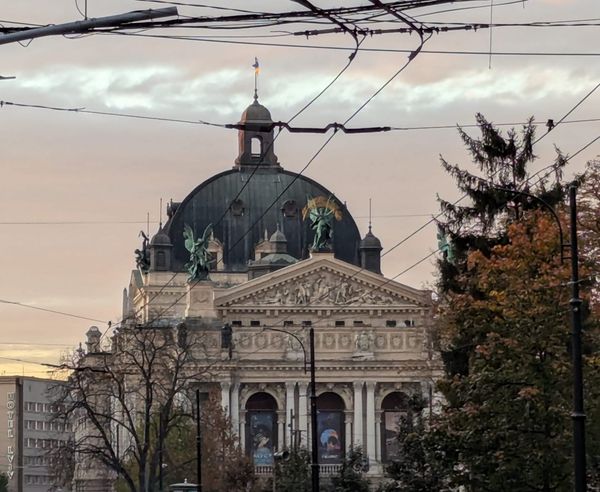
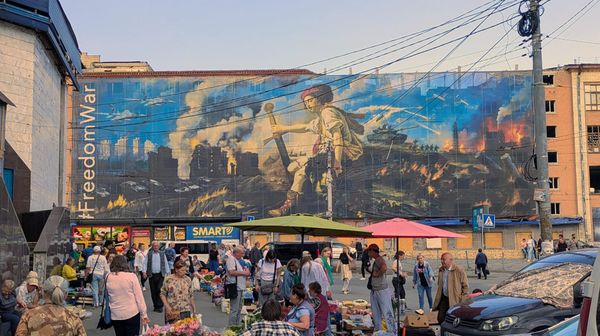
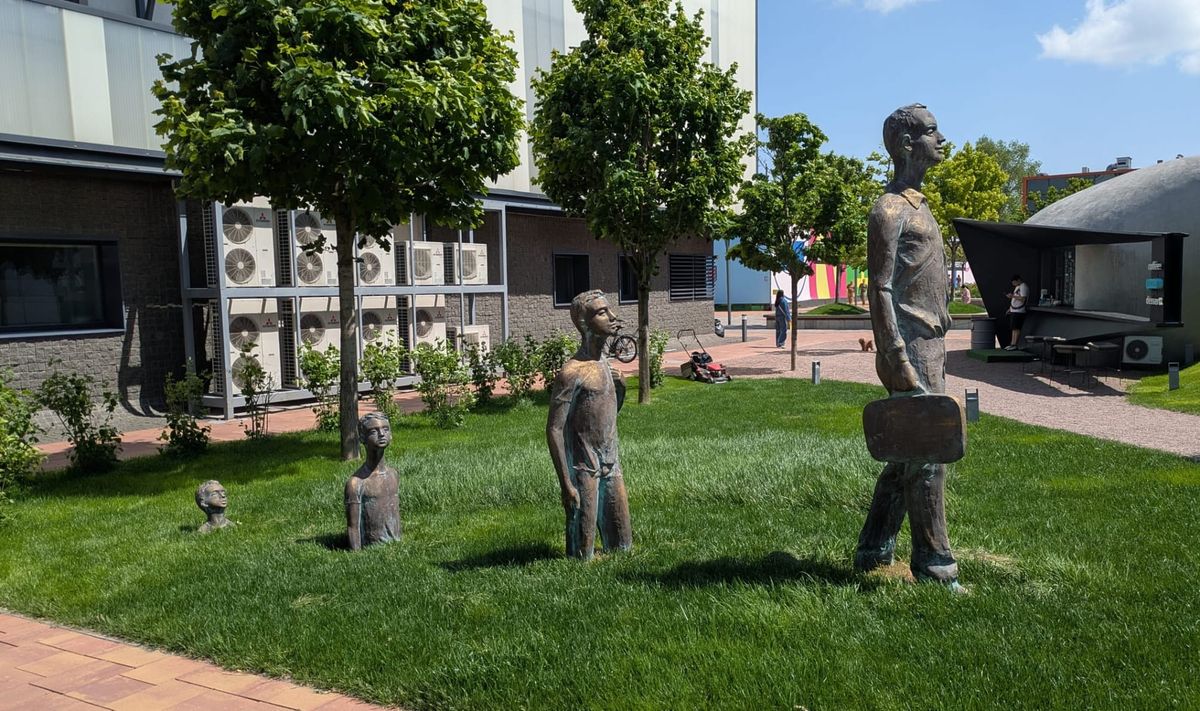
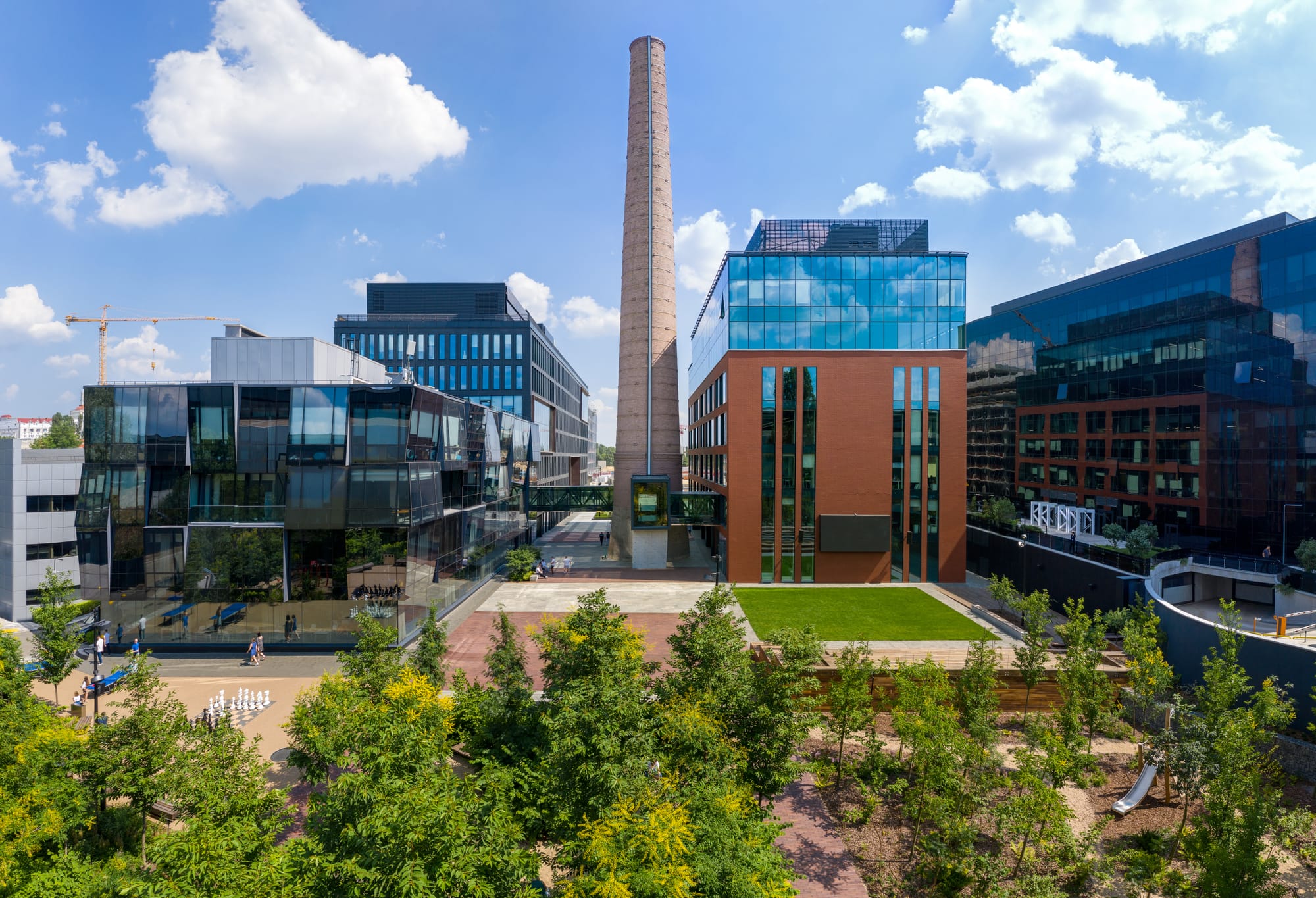
Earlier this summer I was in Ukraine to visit with colleagues and contacts in three dimensions rather than in our co-working spaces in Zoomlandia. Despite several nights of air alerts and occasional drone attacks and other threats, I found safety and joy and hope throughout my time there. And I saw many things from which we can learn. To that end I want to tell you about a visit I made to Unit.City. Unit.City is designed as a 15 minute city. It is the sort of place where people can go to school, go to work have a great coffee, try new food, watch a play, go to a concert, live, sleep--all within 15 minutes.
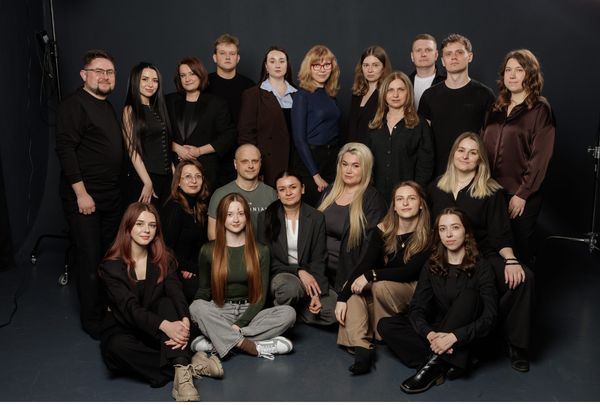
We don't hear enough about how Ukrainians are fighting the war against Russia and cynicism through rapid and creative economic iteration. Think of Unit.City, and other incubators around the country, as a real life laboratories, where all involved--be it BMW or a recording studio collecting the stories of soldiers or a coffee shop--are moving through the process of conceiving, prototyping, testing, redesigning, producing (repeat)...
So here is the pitch: get a reporter over to Ukraine and have them look at what Unit.City and other places like it in Ukraine are building and supporting. Think of these places as laboratories for community-oriented economic engines. Ukrainians are doing this learning in spite of war AND as a response to Russian aggression, with a collective will to prevent this war from crippling their country and their people (and we all benefit from their work).
You might speak with Костянтин Євтушенко / Constantine Yevtushenko, managing partner of Unit.City, as I did. Constantine made me realize I could use the word innovation again. It had ceased all meaning in the US thanks to people who call themselves innovators rather than just innovate in their practice. While roaming through the shops, residences, and businesses in Unit.City, I was reminded of what innovation looks and feels like.
Of course, like so many people who innovate, Constantine smirked when I asked him about the power of innovation I see in he and his fellow Ukrainians. He pushed back on the word himself. While Unit.City "started as a place for innovation, as a place for tech talents," he told me, he believed that the word innovation had become "diluted," and instead steered the conversation toward "problem solving." Problem solving is "the very serious strength" of Ukrainians, he argues. (It is also a central part of the source code of Planet Money* - hence the reason I am using you in this post to bring attention to how other journalists can check-the-frame on Ukraine).
Some other lessons from my conversation with Constantine:
GG: Tell me about the design of Unit.City as a ”fifteen minute city” What does that mean?
Constantine Yevtushenko: That means that you have the residential part, you have the school, preliminary school and high school, you have kindergarten, you have your office, you have the restaurants, you have barbershops, you have grocery stores, whatever. I mean, you everything would you need, you have within 5 minutes walk. You don't need to travel, you don't need to spend the time in the traffics, you just stay here and enjoy the great infrastructure, architecture, and great people because I still believe that today we have 6500 people in unit city working. And I believe that this is the highest number of smart people per square meter in Ukraine for sure. Maybe in Europe.”
GG: Education is a central pillar. Though you have education within a business and life path or road-map, it seems. ¿How is it designed?
Constantine: It is built like in a gaming system. Stage one, stage 2, stage 3, and then by the stage 21, you know how to code in the different languages. The idea was that when you start the course, you have 100 people. You have very, very easy tasks at the beginning. Each of the tasks you solve within the team, a team from 2 to 6, and then platform is analyzing your moves, and then matches people to do peer to peer problem solving. And results were really great. We have 900 people who finished the program. Most of them, they stayed in within the companies in Unit.City.
GG: And then the cycle continues and grows. You worked with US schools like the University of California Berkeley and Stanford, and they are good partners for you. Though this seems like a new model of education. How does it differ?
Constantine: I graduated with an MBA, I think that only after 6 or 7 years after that I understood that whatever they taught me there, life and work was not always like that. They said, "if you do this, then you're right. If you don't do this, then you will fail." That is the opposite of entrepreneurship because an entrepreneur always tries to find the way. If it fails, okay. You redesign and then you move forward. So that is the idea for us. And we decided to open the school, especially for entrepreneurs, study, scrum, agile, lean, you know, something that you can implement next day in your daily routine, your daily work. That was a very successful project. And on top of that, we also built an industrial acceleration program, and we invested as a company. We invested a small portion of money in order to let students have the capital to build the idea that they want and put those companies into our industrial parks. So it was like, you know, a very vertical integrated program. And then war came....
War came. And this is where you can pick up the story. War might have slowed down the path to the ultimate plan and vision for Unit.City. Yet, it seems to me, it sped up the iterative process. And the fact that their approach keeps keeping on confirms that it is indeed a well designed model for economic innovation. As I was leaving Kyiv, Russian attacks on the city increased. Unit.City's residence quarter was hit. The vision and the city did not break. Here is where you can pick up the story, Alex. Or get others to. We have a lot to learn. And we have a role to play in this war of cynicism against hope and creativity.
*¿Who am I to pitch a Planet Money story?
Just a guy who knows your source code from having Adam Davidson pitch his idea for Planet Money over several beer sessions back in '07 (I work cheap). This was before NPR knew what to do with Adam’s ideas. Later I got to listen through ideas from past PM reporters like Sonari and Steve. I admire what you do and what you might do, and if this doesn't fit your pitch process anymore, I’m sexy that I'm out of date. Still, I invite you to consider how what is happening in Ukraine is relevant to our lives and work, and can offer us models and lessons.
Sincerely,
your fan GG
deep gratitude to Diana Maslianchuk, head of International Partnerships at Unit.City for her guidance in this research and collaboration